Global South Strategic Intelligence

Forensic geopolitical advisory for consequential decisions, disputes and strategic exposures.

GSSI examines the sovereign, political and institutional assumptions behind consequential decisions — and the dependencies those decisions quietly rely upon.

London · Global South primary-source focusDated pre-event analytical record · Assessed against subsequent outcomesIndependent · Forensic · Decision-oriented

Three desks. Three kinds of institutional problem.

GSSI is organised around the problem the client needs to solve — not around generic report formats. Each desk applies the same forensic analytical discipline in a different institutional setting.

01

Forensic Sovereign Risk Desk

Capital · Portfolio · Transaction · Decision
Principal Challenge SessionPortfolio Exposure ReviewDecision Red TeamSovereign Transaction Risk Opinion

Independent challenge of the sovereign, political and institutional assumptions embedded in portfolios, transactions and consequential financial decisions. The Desk identifies the dependencies a position quietly relies upon — and tests whether they hold.

Sovereign risk advisory →
02

Foreseeability Desk

Disputes · Claims · Contemporaneous evidence

Forensic reconstruction of what was reasonably knowable, when it was knowable, and what contemporaneous evidence existed before an event or decision. Built for counsel and disputes teams where foreseeability, warning, reliance or decision timing is in issue.

Foreseeability analysis →
03

Hormuz Risk Desk

Insurance · Maritime · Corridor governance

A retained specialist capability for insurers and institutions carrying material Persian Gulf corridor exposure. The Desk tracks the political, institutional, sanctions, insurance and operational architecture governing Hormuz — not merely whether ships are passing.

Hormuz risk advisory →

A portfolio does not need to be in the Global South to be exposed to it.

Risk travels through state behaviour, strategic corridors, commodities, sanctions, institutional dependencies, financing structures and supply chains. A developed-market asset can carry material Global South exposure several layers from its legal domicile.

How Global South sovereign and geopolitical risk reaches a decision →

Illustrative transmission pathways
Political disruption→Critical mineral supply→European industrial asset
Persian Gulf escalation→Shipping / insurance constraint→Global logistics exposure
State intervention→Contract / convertibility risk→Private credit position

What GSSI said before the outcome.

The examples below are selected from a broader private archive. Dates refer to the issued or communicated record — not to later validation material. The underlying confidential documents are not reproduced publicly.

August 2025 · Project Sesame

Hormuz closure authority and market transmission

GSSI’s confidential August 2025 record stated that IRGC commanders could seize assets or close the Strait of Hormuz under Article 176 authority, and modelled how a sustained chokepoint event could transmit through war-risk insurance withdrawal and repricing, shipping capacity and commodity markets.

Sovereign authority → corridor control → insurance / shipping constraint → market disruption
18 January 2026 · GSSI Strategic Playbook

Hormuz as a sequenced instrument of escalation

Forty-one days before the conflict, GSSI modelled Hormuz not as an immediate reflex but as a later-stage instrument of pressure, with activation expected after the opening phase of a wider confrontation. The record placed Hormuz activation at Day 12+.

Conflict onset → escalation sequence → Hormuz activation → commercial pressure
29 January 2026 · Iran Resilience Study / MOSP

Article 111 continuity architecture

Pre-war work specified constitutional continuity under leadership loss, including the Article 111 mechanism, a temporary leadership layer and pre-delegated response architecture rather than assuming person-centric state collapse.

Leadership loss → constitutional continuity → command recovery → state persistence

Public work. Independent references. Professional engagement.

The private contemporaneous record is one proof layer. GSSI also maintains a public body of work and has been cited or engaged by independent specialist institutions.

Current publication
GSSI Sovereign Risk Weekly

Standing current analysis across sovereign, institutional and geopolitical risk.

Read on LinkedIn →

Evidence first. Structure second. Consensus last.

Five steps take the work from sovereign-system diagnosis to an institutional decision: diagnose, establish the evidence, analyse the trajectory, challenge the conclusion and translate it into the exposure that matters.

01 / DIAGNOSE

Sovereign Spectrometer

Diagnose how a sovereign system is built, funded, governed and likely to behave under stress — across fiscal capacity, institutional authority, continuity, resilience and external dependencies.

02 / ESTABLISH

Primary-source evidence

Original-language, fiscal, legal, institutional, market and commercial records are assembled before the prevailing narrative shapes the conclusion.

03 / ANALYSE

VERITAS

Test actors, institutions, contradictions and trajectories against the accumulated record to distinguish structural change from isolated noise.

04 / CHALLENGE

Adversarial testing

Separate evidence, interpretation and judgement; test competing explanations and identify the conditions that would require the view to change.

05 / TRANSLATE

Institutional decision

Translate the conclusion into the portfolio, transaction, dispute, insurance, commercial or operational exposure that matters.

Analytical record

Conclusions are preserved before hindsight and subsequently tested against observable outcomes, including partial validations, misses, unresolved cases and scenarios whose triggers never occurred.

First proving ground

Iran became the first stress-test jurisdiction because sanctions-distorted signals, fragmented visibility and constitutional complexity make surface readings unusually unreliable. Each new sovereign system requires jurisdiction-specific recalibration.

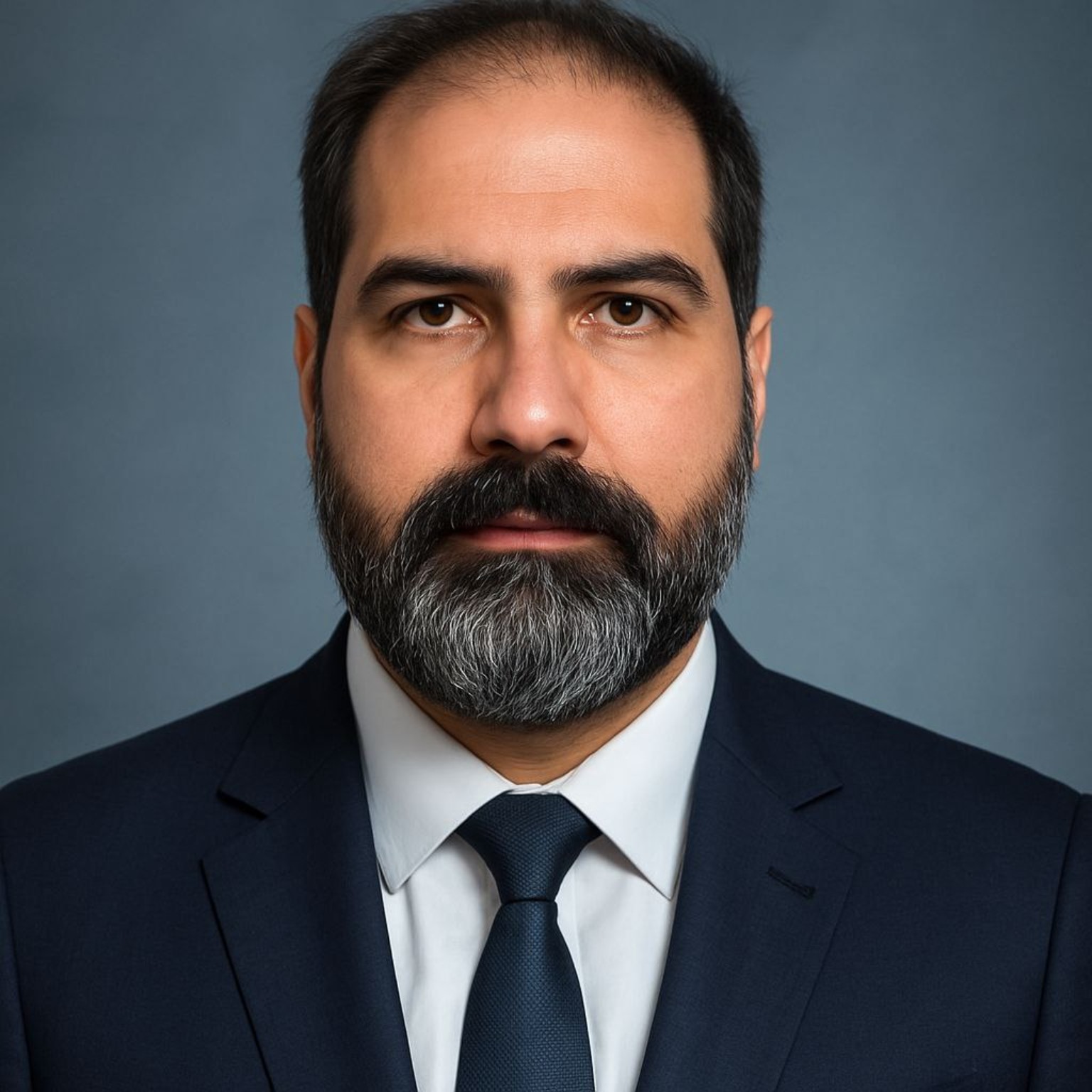
Shahin Iraninejad, Principal of GSSI

Institutional finance discipline applied to sovereign uncertainty.

GSSI is led by Shahin Iraninejad. The analytical method was formed at the intersection of institutional finance, sovereign risk and primary-source research — where judgement has consequences attached.

The Global South lens was formed in institutional finance before it became a forensic geopolitical advisory practice.

$20bn+Transaction and portfolio exposure
20+ jurisdictionsEmerging-market and sovereign-linked exposure
2013–2023ex CS and Citi
DatedPre-event analytical record maintained against subsequent outcomes

Deep transaction experience across Sub-Saharan Africa, North Africa, West Asia and Eastern Europe.

The Principal →

Bring us the exposure, transaction, dispute or conclusion.

GSSI will identify the assumptions it depends on, the evidence that supports them, the dependencies that sit underneath them and the conditions under which they may fail.