The Economist · 2026
Cited twice on Hormuz economics and traffic verification.GSSI analysis was cited in August on the proposed fee regime. In September, Shahin Iraninejad was cited on incentives behind conflicting claims about Strait traffic.

GSSI is led by Shahin Iraninejad. The analytical method was formed at the intersection of institutional finance, sovereign risk and primary-source research — where judgement has consequences attached.
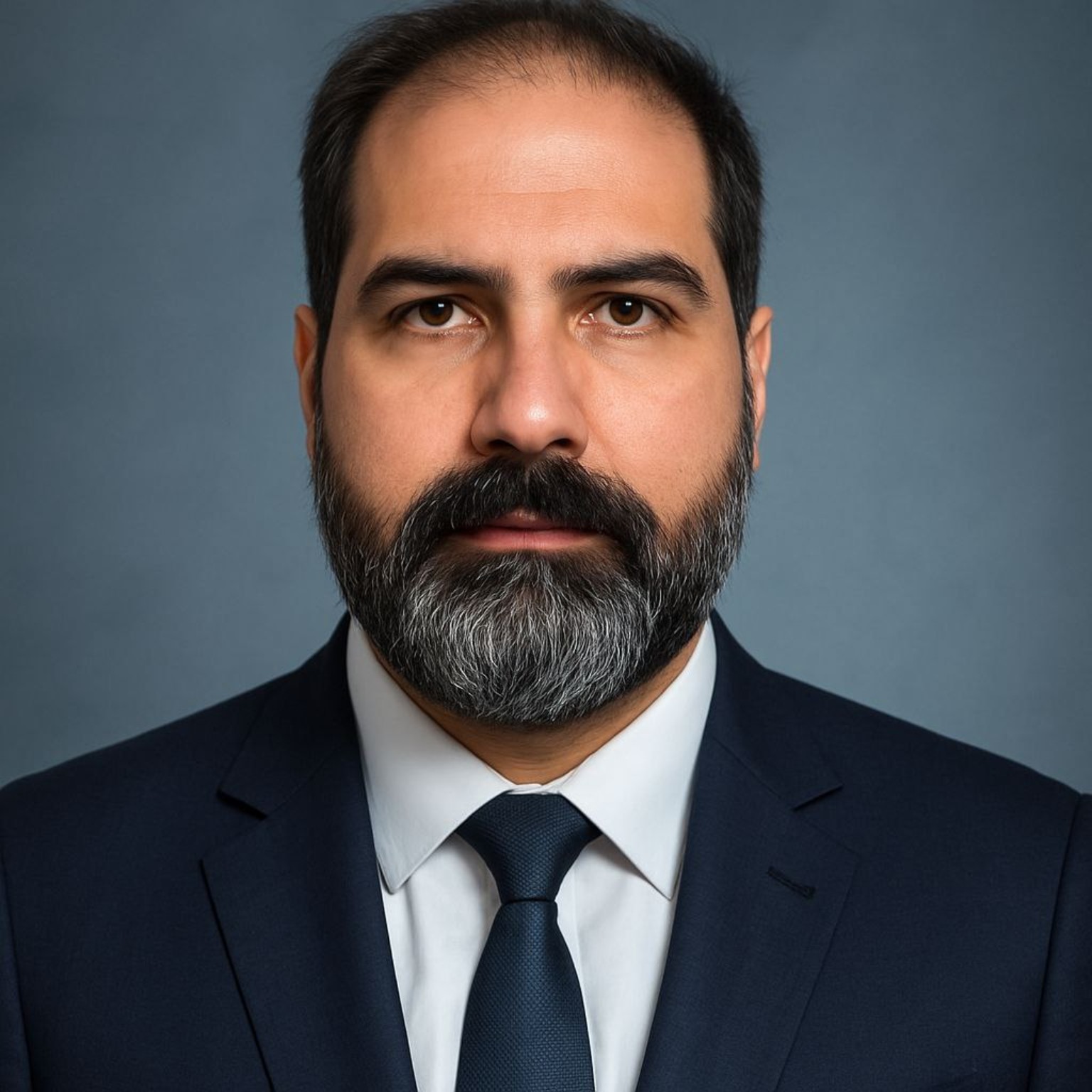
The Global South lens was formed in institutional finance before it became a forensic geopolitical advisory practice.
Between 2013 and 2023, Shahin worked across market risk, strategic risk management, structured credit and investment banking at Credit Suisse, and senior transaction management at Citi Private Bank. His work covered more than $20bn of transaction and portfolio exposure across more than 20 jurisdictions, with extensive transaction execution across Sub-Saharan Africa, North Africa, West Asia and Eastern Europe, alongside broader emerging-market risk oversight across EMEA, Latin America and Asia.
His transaction work included sovereign and quasi-sovereign financings involving the World Bank, African Development Bank, Afreximbank, EBRD, UKEF, China EXIM, export credit agencies and development finance institutions, across infrastructure, power, water, transport, telecommunications and financial institutions.
That background matters because GSSI does not treat geopolitical risk as a commentary layer sitting outside the financial decision. It asks how sovereign behaviour enters structure, pricing, documentation, exposure, insurance, covenants, liquidity and the assumptions on which capital is committed.
Credit, market and transaction work requires a view that can be structured, priced, challenged and defended — not merely published.
Persian-language institutional, legal, doctrinal and political sources are used directly where they matter rather than filtered through secondary interpretation alone.
GSSI focuses on institutional capacity, decision rights, constraints, fiscal architecture and the transmission mechanisms behind sovereign behaviour.
From August 2025 onward, GSSI delivered private analysis to named institutional recipients in advance of major Iran and Hormuz developments. The record is dated and maintained, allowing pre-event analytical calls to be tested against what subsequently occurred.
GSSI maintains time-stamped analytical propositions and later assesses them against observable outcomes, including partial validations and misses. Aggregate scoring is not used here as a public credibility claim.
Material assessments were shared with identifiable professional counterparties, preserving timing and provenance.
The analytical standard is whether the evidence and structure support the conclusion — including when that conclusion conflicts with prevailing interpretation.
Structural work on Iranian institutional resilience and escalation architecture.
Further analysis of institutional hardening and continuity through escalation.
Forensic analysis of the institutional, legal and operational architecture governing the Strait.
Standing current analysis extending GSSI’s structural methodology across sovereign and geopolitical risk.
GSSI’s private record is complemented by an independently hosted public archive, a current weekly publication, editorial references and professional speaking engagements.
An independently hosted catalogue of reports and analysis across Iran, Hormuz, institutional resilience and sovereign risk.
View GSSI on Speevr →Ongoing analysis applying the GSSI method to live sovereign and geopolitical developments.
Read the newsletter →GSSI analysis was cited in August on the proposed fee regime. In September, Shahin Iraninejad was cited on incentives behind conflicting claims about Strait traffic.
GSSI’s corridor-governance framing appeared in specialist LNG and energy-market analysis.
View reference →Presented alongside international-law practitioners and other external experts on the commercial, legal and operational implications of Hormuz disruption.
View event record →The Principal Challenge Session provides direct access to Shahin’s judgement. Larger mandates are principal-led and can be assembled around the exposure, drawing on analysts or senior specialists where the question requires additional sector, legal, financial or regional expertise.
2012–2013
2007–2011
For institutional mandates, retained Desk relationships or a direct Principal Challenge Session, contact GSSI confidentially.