01
Authority
Strait Authority Permission
Is this vessel authorised to use this route under these conditions by the authority exercising operative control?

Strait of Hormuz risk advisory for insurers and institutions carrying material corridor exposure. GSSI examines whether a vessel or voyage can execute under the authority, sanctions, insurance and operational conditions that actually apply.
Conventional risk desks often treat Hormuz as a binary: open or closed, escalation or de-escalation, a probability to be weighted and insured against.
GSSI’s position is different. The corridor’s risk increasingly sits in the institutional framework around passage — permissions, obligations, enforcement, sanctions, insurance, verification and operational acceptance. Waiting for a blockade can mean watching the wrong variable.
Institutional authority, formal and informal permissions, decision chains and the political framework governing the corridor.
Seizures, inspections, designations, signalling actions, military posture and the practical enforcement environment.
Insurance, sanctions, verification, operator behaviour, counterparty requirements and whether technically open passage is commercially acceptable.
The Hormuz Risk Desk is designed for a limited number of institutional clients carrying material corridor exposure. The exact retained structure is built around the client’s book, decision cycle and information needs.
Continuous interpretation of the political, institutional, sanctions and operational architecture affecting the corridor.
Rapid notification when a development alters the governing framework, enforcement posture, insurance conditions or commercial usability.
Direct briefings and exposure-specific analysis for underwriting, portfolio, claims or strategic questions as they arise.
The Desk can also support shipping-side risk functions and counsel where Hormuz transit sits inside delivery terms, contractual performance or claims analysis, but the core retained proposition is built around insurance exposure.
A political reopening or local permission is only one part of the decision. GSSI separates voyage executability into three institutional gates that can fail independently.
Is this vessel authorised to use this route under these conditions by the authority exercising operative control?
Can the payment, service and cover structure be accepted by insurers, banks, compliance teams and other required counterparties?
Has the channel been credibly cleared, and will the master, owner and underwriter rely on the available evidence for this specific voyage?
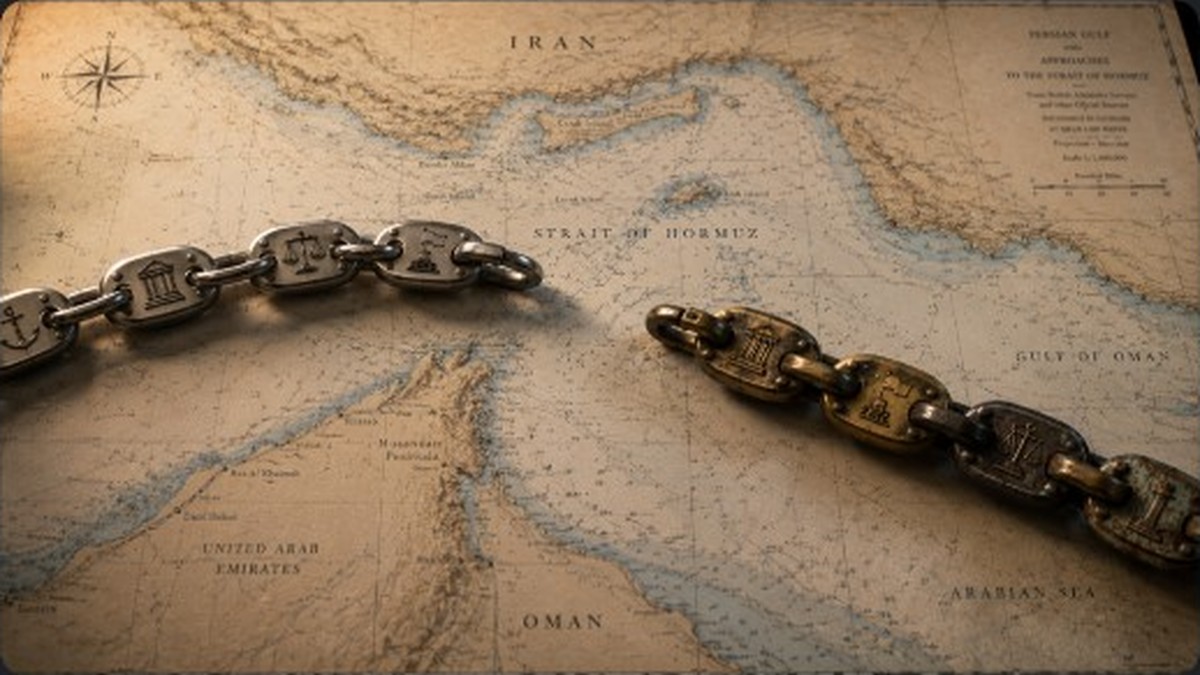
Eighteen editions of GSSI Sovereign Risk Weekly trace the corridor from physical control and passage law into insurance, valuation, sanctions transmission and competing institutional chains.
The record shows how the analytical architecture behind the Hormuz Risk Desk developed in public as the institutional facts changed — not as eighteen isolated articles, but as one accumulating thesis.
From August 2025 onward, GSSI briefed named institutional recipients on the institutional architecture driving Hormuz risk — including the proposition that IRGC commanders could seize assets or close the Strait under Article 176 authority, and the transmission of a sustained chokepoint event through war-risk insurance, shipping and market structure.
The August 2025 record included the proposition that IRGC commanders could seize assets or close Hormuz under Article 176 authority, together with a commercial transmission chain through war-risk insurance withdrawal/repricing, shipping capacity and commodity markets. These positions were delivered before the later event sequence and remain part of GSSI’s dated private record.
The record is preserved through identifiable recipients and timing, rather than reconstructed from public commentary after the event.
The value of the Desk rests on analytical propositions that can be compared with what subsequently happened.
The full institutional record is not published, but can be substantiated to serious counterparties where appropriate. A separate body of public GSSI analysis is independently hosted.
GSSI’s public Hormuz analysis has been independently cited by specialist publications and presented within legal and institutional forums.
Energy Intelligence cited GSSI on whether markets would stop waiting for the Strait to “reopen” and begin pricing selective access as permanent.
View reference →GSSI was cited first on the economics of the proposed fee regime and then on why competing official claims about traffic need testing against observable flows.
The corridor was examined as both a geopolitical exposure and a disputes problem before a professional legal audience.
View event record →GSSI’s maintained public record includes work on corridor governance, selective passage, Islamabad and post-war Hormuz architecture.
View GSSI on Speevr →The Hormuz Risk Desk is not intended as a mass-market intelligence subscription. Engagements are confidential and bespoke, with scope shaped around the client’s exposure and the depth of standing access required.
The commercial relationship may include standing monitoring, executive or underwriting briefings, exposure-specific work, rapid-response analysis and access to the Desk’s maintained analytical record.
Corridor authority, sanctions and commercial acceptance are also channels through which sovereign change reaches a wider portfolio or transaction.
Explore the Global South sovereign and geopolitical risk framework →
For insurers, reinsurers and other institutions with material Persian Gulf exposure, contact the Principal directly to discuss a retained mandate.