
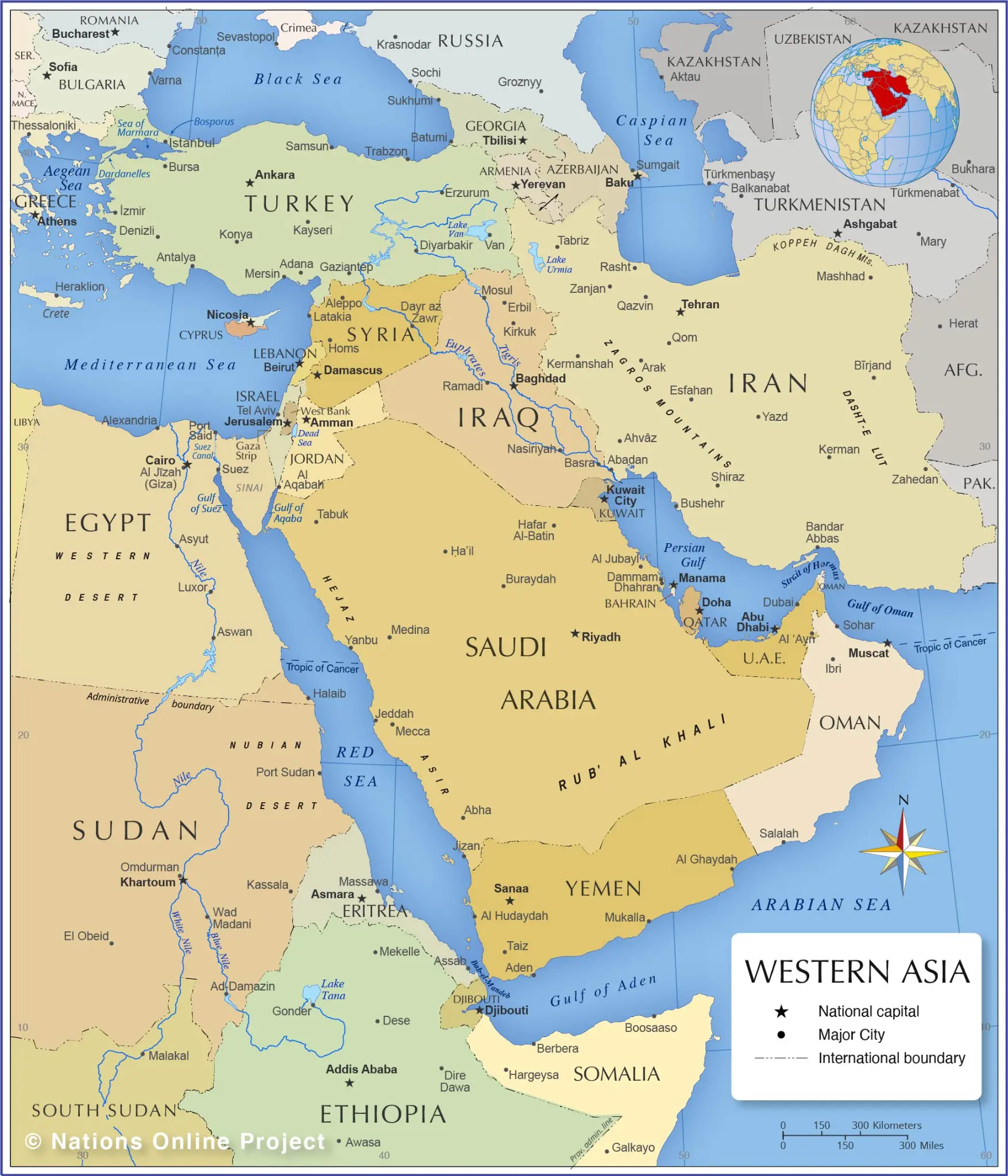
Seven months after the war on Iran began on 28 February 2026, the Strait of Hormuz is neither closed nor open. Saudi crude crosses it in convoys, mostly with transponders switched off, under American air and naval cover. Iraqi cargoes cross it with Iranian permission. Iran's own exports have been cut to a fraction of their pre-war level by an American naval blockade of Iranian ports. Brent crude, which had fallen back to its pre-war level of about $72 a barrel in late June, traded near $108 on 28 September. The question most institutions still ask — when does Hormuz reopen? — assumes that there is a prior condition to return to. This edition argues that there is not. The reason there is not is the starting point for a larger question: who will write the order of the region the Strait sits in.
GSSI's weekly record of the Strait, published as the first season of this newsletter, documented how a regional state converted military leverage into an institution between 28 February and 1 May 2026. It had a statute, a named authority, a revenue line and an enforcement practice, and other states, insurers, banks and shipowners had to transact inside it, whether or not they recognised it. That record is the origin of this season, not its subject. The subject is what the record implies about the region as a whole.
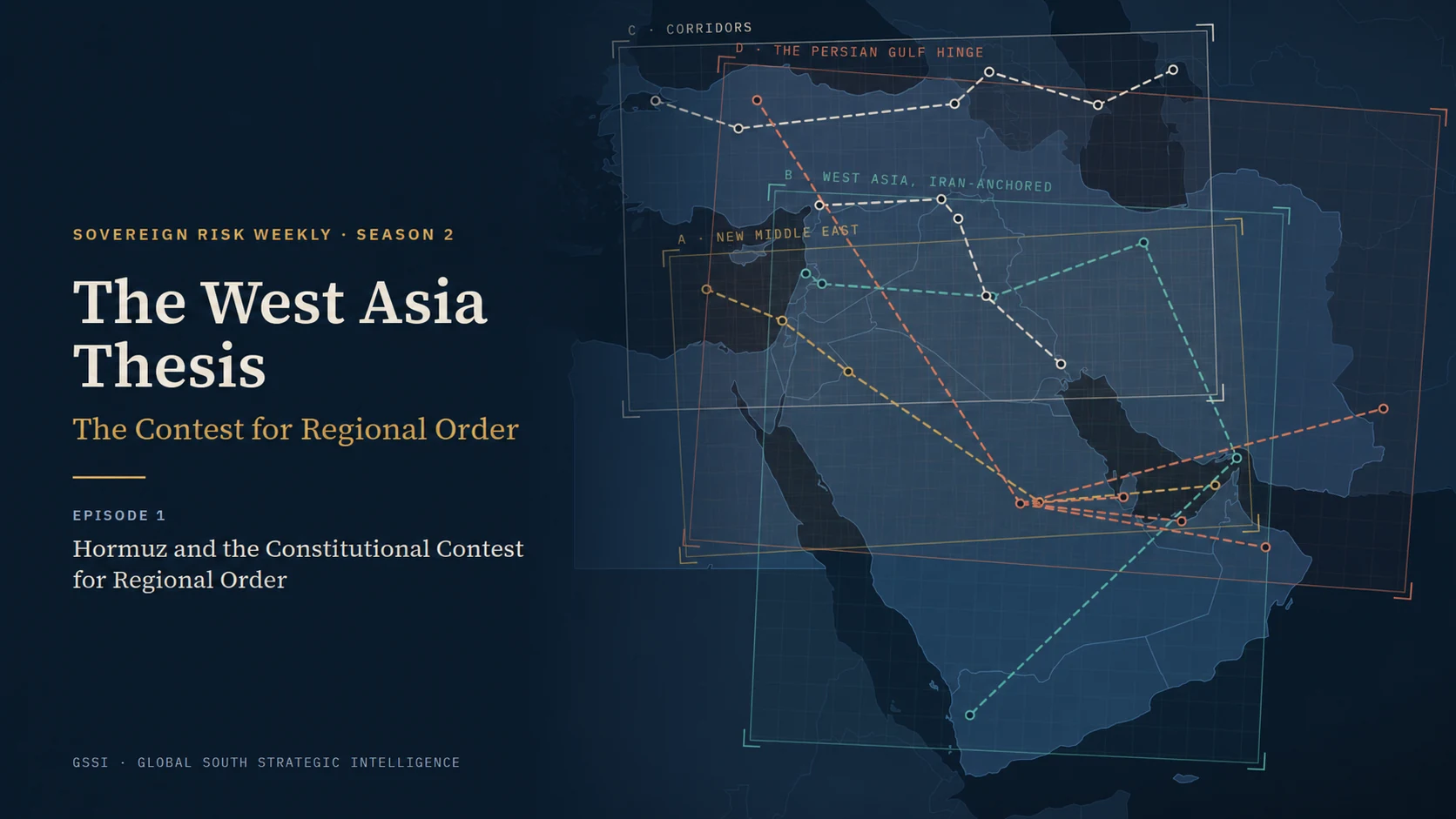
The West Asia Thesis holds that the order of West Asia is being contested rather than inherited. The contest has a start date: 7 October 2023. The sequence that brought the region here runs from that day through the wars in Gaza and Lebanon, the Ansar Allah (Houthi) campaign against Red Sea shipping from November 2023, the fall of the Assad government in December 2024 and the war on Iran from 28 February 2026.
At least three projects are competing to constitute the order: a New Middle East anchored on Israel and underwritten by the United States; a West Asian project anchored on Iran; and an emerging Turkish project carried by corridors. The Persian Gulf states hold the hinge on which the contest turns: their alignment decides which project consolidates, but they have not built one of their own. China, India and Russia route across all of them. Which project, alone or in some combination, becomes the coming order is an open question. This season is built to test it, not to announce an answer.
The source is GSSI's institutional paper, The West of Asia Thesis: The Constitutional Contest for Regional Order, integrated here with the evidence to 30 September. The method is the one this newsletter has always used: evidence first, structure second, consensus last.
This edition does three things. It states what the Hormuz record has settled, at the confidence the evidence now supports. It sets out what that record opened: the contest itself, and the actors in it. And it states how the season will work, including the observations that would force the house view to change.
WHAT THE STRAIT SETTLED
Four findings, and the confidence each carries at the end of September
The pre-war Strait is not coming back on any timescale a market can price. The unmanaged, unpriced, flag-neutral Hormuz of 27 February 2026 was a regime, not a natural condition of the water, and it has been replaced. By the second quarter of the year, that was no longer a contrarian view. It was the stated position of Iran in public, of Oman in private to European officials, and of the United States in the text it signed at Islamabad in June.
The record since then has hardened the finding. When Iran announced a temporary transit route agreed with Oman on 26 August, Oman's foreign minister, Badr Albusaidi, said that the "future management of the strait and a permanent solution will follow in due course". In late September Tehran proposed to reopen the Strait within a week, in exchange for released funds, sanctions relief and an end to the American blockade of Iranian ports. President Trump rejected it. Neither text treats the pre-war regime as a default the parties return to once the shooting stops. Both treat passage as something to be arranged — and anything that has to be arranged has someone who arranges it.
What would falsify the finding: a settlement restoring flag-neutral, unpriced transit at pre-war insurance terms, with no Iranian permit or fee system left in place. On the evidence to 30 September, that outcome remains remote. GSSI holds the finding at high confidence.
What replaced it is an administration, not a blockade — and the administration is now contested in the water. The distinction is the core of the analysis. A blockade denies passage. An administration governs it. The commercial condition this produces is best described as an administered abnormality: a route that is open to some traffic, on terms, with permission, priced for peril, and never normal.
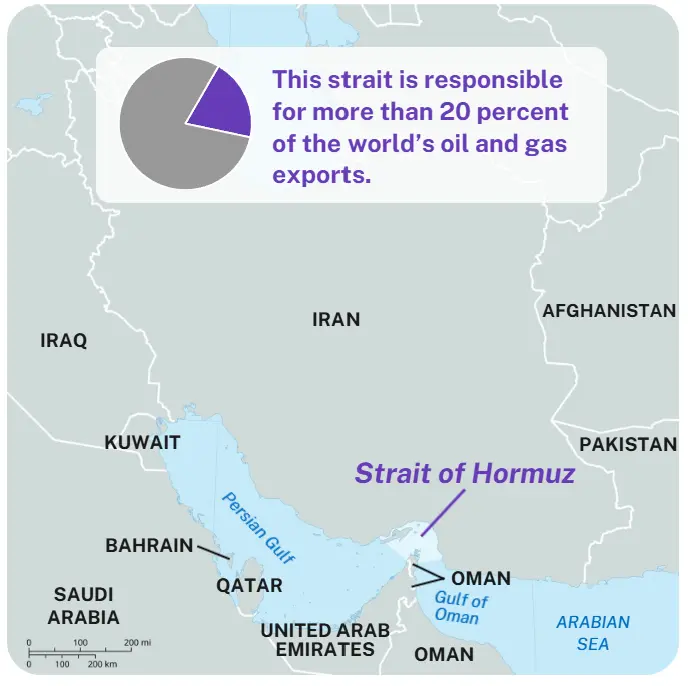
The Strait therefore now carries two competing claims to govern passage, and neither resembles the rules that applied before 28 February. In the north is an Iranian permit regime, built on the doctrine of innocent passage. In the south is an American-protected lane, run on the premise of transit passage. Each is enforced by armed force, and neither is recognised by the other. That is not a return to the old order. It is the contest for the new one in its most compressed form: two authorities asserting the right to set the terms of transit through the same water.
Two things are true at once. What exists is governance, not mere disruption: the Iranian arrangement has rules, an institution, revenue and a record of enforcement, and it has outlasted every attempt to wish it away. GSSI holds that at high confidence on the documented record. But the compliance criterion, while still met, is under strain. It holds for traffic that has no armed alternative, and it is eroding for flows that do. The arrangement therefore meets seven of the eight criteria, with one of the seven weakening. It is best described as a contested administration: government-like where it is unchallenged, and one claim among several where it is not. What would falsify the finding: the collapse of the permit regime under sustained pressure, so that traffic in the northern corridor also moves without Iranian permits, or an authoritative legal defeat that both Iran and the market accept.
The operative closure was actuarial — but only because a credible military threat created the peril first. Both links belong in the causal chain. The Revolutionary Guard Navy's warnings on the first day created the danger. The London market converted that danger into commercial closure within seventy-two hours, before any sustained interdiction of shipping. Protection-and-indemnity cancellation notices went out on 1 March, and the Joint War Committee expanded its listed area on 2 March. War-risk premiums moved from roughly 0.25 per cent of hull value to 5 per cent in seventeen days. The mechanism ratchets. The adversary spends a finite missile inventory once to make the threat credible, and the insurance market then prices that threat continuously, with no further military action required. In effect, the enforcement is outsourced to the actuaries. The mechanism was piloted in the Red Sea from December 2023, where premiums held across two ceasefires without a full reset. GSSI holds the actuarial finding at high confidence on the market record.
The market does not possess sovereignty. It possesses economic permission — and Washington has tested how far state capital can substitute for it.
The lesson for anyone underwriting or lending against Persian Gulf exposure is precise. State capital cannot manufacture the permission that the peril withholds. The underwriting question is therefore not "is cover available?" but "whose assurance is this cover pricing?" What would falsify the actuarial finding: a full premium reset and de-listing after a durable ceasefire.
The contested question is constitutional — and it has four layers, not one. The dispute at Hormuz is usually framed as whether Iran is complying with the law of the sea. That framing collapses four separate questions, and every commercial and legal conclusion depends on keeping them apart.
The legal completion of Iran's architecture does not require a full fee regime. It requires a services framework with a second signature on it — and, as of 30 September, that signature has not been given.
These four findings are the base the season builds on. The full record is published at globalsouth-intel.com/research/innocent-hormuz. It is not relitigated here.
WHAT THE STRAIT OPENED
The narrow claim, the broad claim, and the vantage from which to test the second
An order is a set of arrangements that other actors have to transact inside, whether or not they endorse them. On that definition, the Hormuz record supports a narrow claim at high confidence: at one location, over a documented period, a regional actor converted leverage into a functioning institution that others had to transact inside. It supports a broad claim only at moderate confidence: that this was not an exception but a representative instance of how order in the region is now being made — by regional actors converting leverage into institutions. The instruments the West built to hold that leverage in check turn out to cut both ways. Sanctions, chokepoint enforcement through private markets and the selective invocation of the law of the sea were all used at Hormuz, and all were used by more than one side.
The distinction between the two claims is the reason this season exists. A reader persuaded only of the narrow claim keeps every commercial and legal conclusion about the Strait. The broad claim is a different proposition, and it cannot be proved in the place where it was first observed. It has to be tested elsewhere: in the corridors, in the Persian Gulf capitals, in Ankara and Baghdad, in Beijing's silences and Moscow's contradictions, and in the currency in which Persian Gulf energy is invoiced. It may hold. It may hold only in part. It may fail in ways that reveal more than its success would. The contest for regional order is the name for what the broad claim describes: not one challenger replacing one guarantor, but several projects each trying to convert leverage into arrangements that others must accept. The season is designed to find out which of them, if any, succeeds.
Testing that claim requires the right vantage. For most of the last century the region has been analysed from outside and named from outside. The term "Middle East" was given its strategic form in September 1902 by the American naval strategist Alfred Thayer Mahan. He was writing about where British power needed to concentrate to contain Russian expansion toward the Indian Ocean. The term described a middle distance measured from London, between Britain's near problem and its far one, and it passed to Washington with Britain's strategic position after 1945. The name encodes a vantage point. It tells the analyst to read the region through the interests, guarantees and military credibility of the power doing the naming. And once that power's position changes, it cannot answer its own question: middle of what, measured from whose centre?
This season uses "West Asia" — the west of Asia — because it is geographically accurate. The region is the western edge of the Asian landmass and of an Asian economic system whose centre of gravity has moved east. The term is used across much of Asia and the Global South. It is also used in Tehran, in the same way that "Persian Gulf" is used in Tehran and was used in the administrative correspondence of the British East India Company. Accurate geography is not partisanship. GSSI uses the name because it describes where the region is, not because it anticipates who will prevail in it.
THE CONTESTANTS
The projects competing to write the order, the states that decide between them, and the question put to each
The thesis identifies two constituted projects, one emerging project, a decisive hinge, a set of system-spanning powers, a node that every project must pass through, and a constraint that none of them can engineer away. Each is taken in turn in later episodes. What follows is the map rather than the territory: where each actor stands on the evidence to 30 September, and the question the season puts to it.
The New Middle East. The first project is anchored on Israel and underwritten by the United States. It is organised around three things: normalisation with the Persian Gulf monarchies, begun with the Abraham Accords and still incomplete without Saudi Arabia; an economic corridor running from India through the Persian Gulf and Israel to Europe; and Israeli military primacy as its security spine. It has a documented lineage, from the "new Middle East" that Secretary of State Condoleezza Rice invoked in July 2006 to the maps Prime Minister Benjamin Netanyahu displayed at the UN General Assembly in 2023 and 2024.
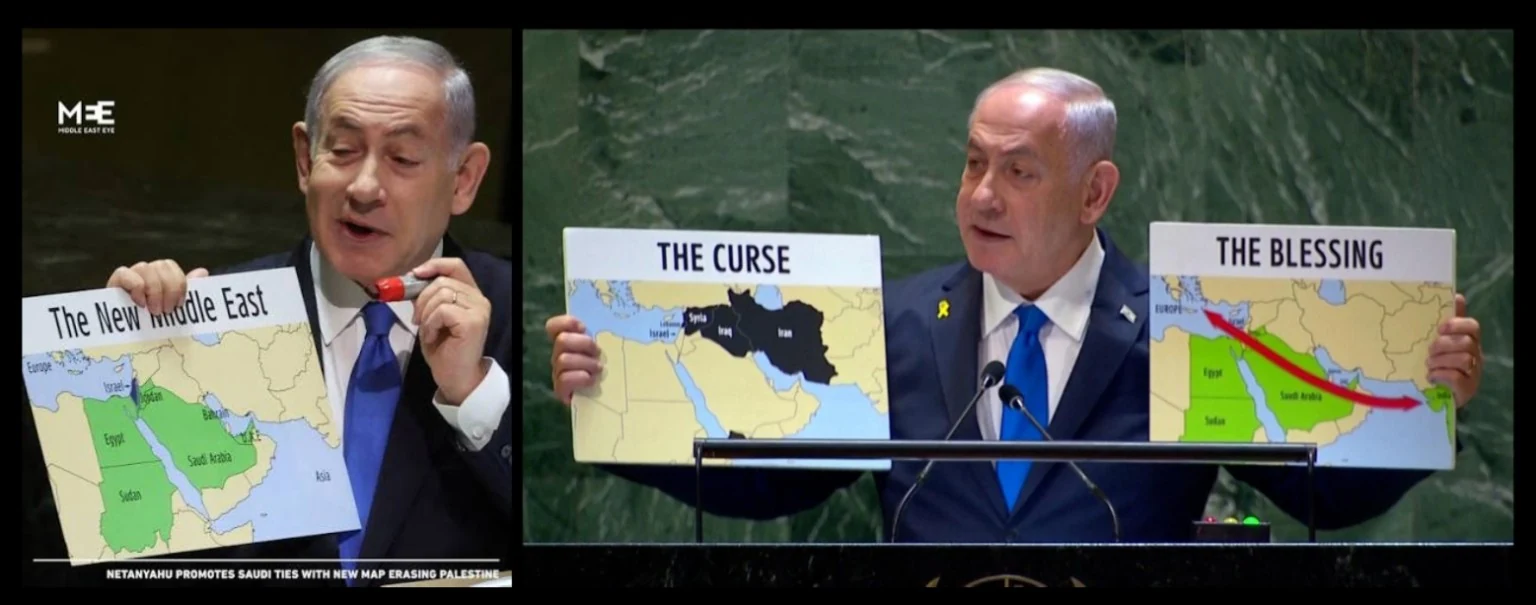
It is the best-resourced of the projects. It draws on American capital and guarantees, and on the region's most capable conventional military. But its signature corridor, the India–Middle East–Europe Economic Corridor (IMEC), is still a memorandum with component projects, not an operating route. And its central instrument, the credible threat of force, hit a ceiling at Hormuz. Overwhelming military superiority could not overcome the combination of geography, market behaviour and an asymmetric strategy, and it did not restore commercial normality. The southern lane that now carries Saudi crude runs under escort, not on market terms. The question the season puts to it: can a project whose central instrument is force complete itself, when force alone could not reopen the region's most important waterway on commercial terms?
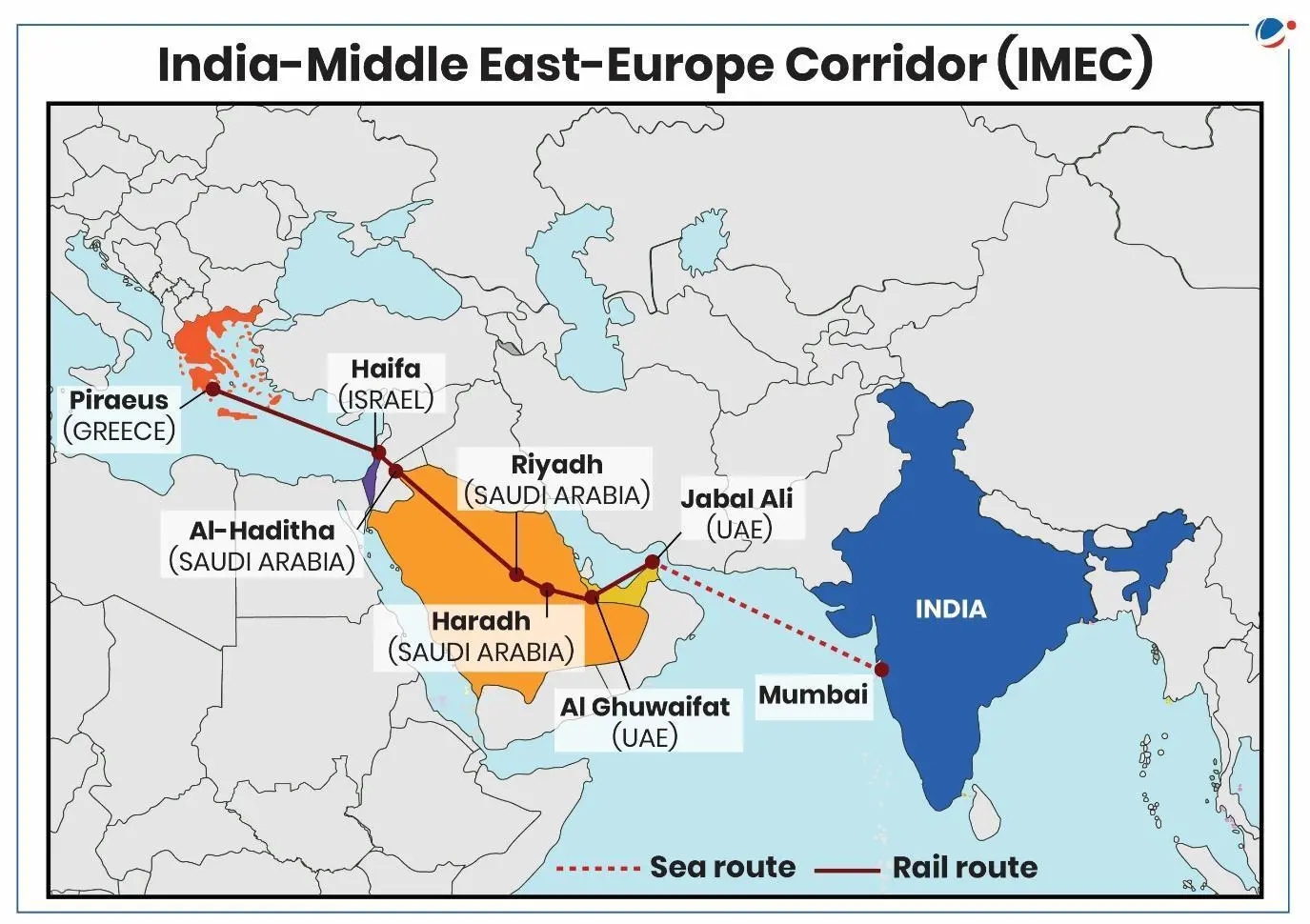
West Asia, Iran-anchored. The second project is anchored on Iran. It is usually described as a state with a veto, able to deny and disrupt but not to build. Hormuz contradicted that: there, Iran built. But the project is real in fact and weak in law. It lacks external recognition, the legal endorsement of either of its principal partners, Russia and China, and the capital depth to make its architecture durable beyond its own operational reach.
Its positive economic order is asserted more than built. The assertion predates the war: in November 2022 the late Supreme Leader, Ayatollah Ali Khamenei, told an audience of students that "a new order will govern the world". He named three of its defining features — the isolation of the United States, the transfer of power from the West to Asia, and the expansion of the resistance front — and asked what Iran's place in it would be. The economic building lags. The corridor the project depends on most, the International North–South Transport Corridor, moved about 26.9 million tonnes in 2024, roughly one-twentieth of the Suez Canal's throughput. Its missing western link, the Rasht–Astara railway, is being built on a €1.3 billion Russian loan.
The resistance front is the project's instrument of reach. It is the network of allies Tehran has built since the 1980s: Hezbollah in Lebanon, Palestinian factions, armed groups in Iraq, Ansar Allah in Yemen and, until December 2024, the Syrian state that connected them. Through it, Iran's preferences carry weight in Beirut, Baghdad and Sanaa and along the Bab al-Mandab without Iran governing any of them. Tehran describes the front as something built, not a set of sympathies. In September 2023 Khamenei said that Iran was not seeking to expand its geographic borders, but that the Iran–Iraq war, the "Sacred Defence", had expanded the border of "resistance". In November 2023 he claimed that the political map of West Asia had changed — "but in favour of the resistance". In December 2023 he credited Qassem Soleimani with turning scattered resistance groups into a single front, "because the other side organises itself into a front, so this side must do the same", and argued that five units acting together are worth more than five times one. For an order anchored on Iran, the front does the work that alliances, capital and recognition do for the other projects: it extends reach without extending territory.
Since 2024 the front has been tested harder than any other part of the project, and it has not acted as one. Hezbollah lost its secretary-general, Hassan Nasrallah, in 2024, and the fall of the Assad government in December 2024 closed the Syrian corridor through which Iran had supplied it. Palestinian factions have been under a US-brokered Gaza ceasefire since October 2025. When the war on Iran began, the remaining parts moved on different clocks. Hezbollah entered on 2 March, citing both Israel's continued presence in the south and the killing of Ayatollah Khamenei; Israel answered on 16 March with a ground operation in southern Lebanon. Ansar Allah stayed out for four weeks, fired its first missiles at Israel on 28 March, stopped after the June memorandum and in July claimed strikes on two Saudi tankers. Armed groups in Iraq fought on their own terms rather than as one front: militias struck US positions with drones and missiles from March, several factions had pledged by June to place their weapons under state control, and in September drones launched from Iraqi territory hit Saudi Arabia's East–West pipeline. GSSI's January scenario pack expected the allies to activate together if the leadership was struck. They did not, and the season records that as a miss. The front survived, but as a set of separate fronts rather than a single instrument.
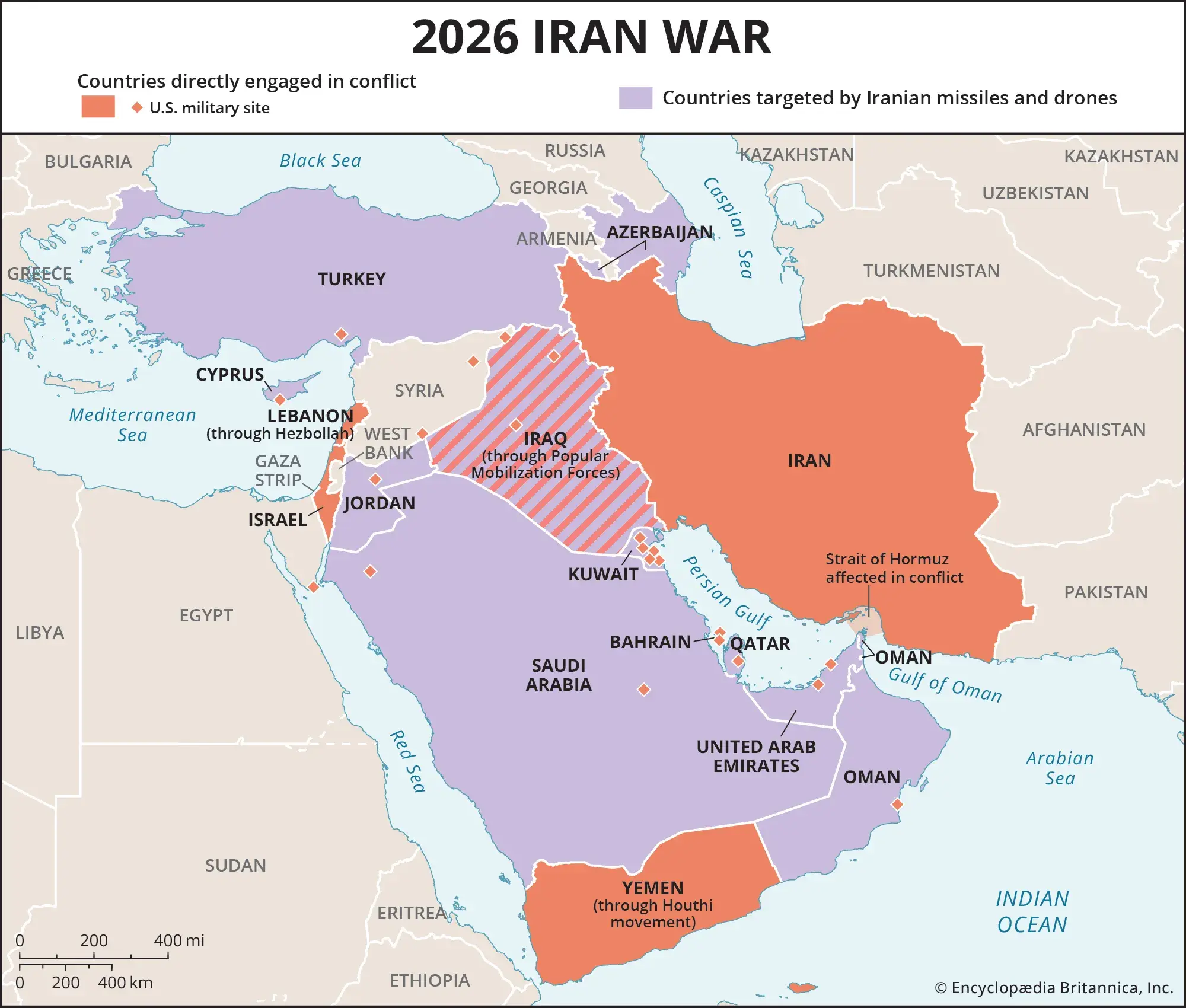
That leaves the project with two instruments that do different things. The front is a capacity to deny: it can raise the cost of other projects' corridors and lanes, from the Bab al-Mandab to the land bridge through Iraq. The Hormuz administration is a capacity to govern. The weaker and less coordinated the front, the more the project's claim to constitute order rests on a single chokepoint, and September added a limit there too: the administration Iran built cannot, on current evidence, stop an escorted lane on the southern side of the Strait, and Iran's own exports are under blockade. The question: can a project that has shown it can administer a chokepoint, and whose network beyond it now acts unevenly, constitute anything beyond one?
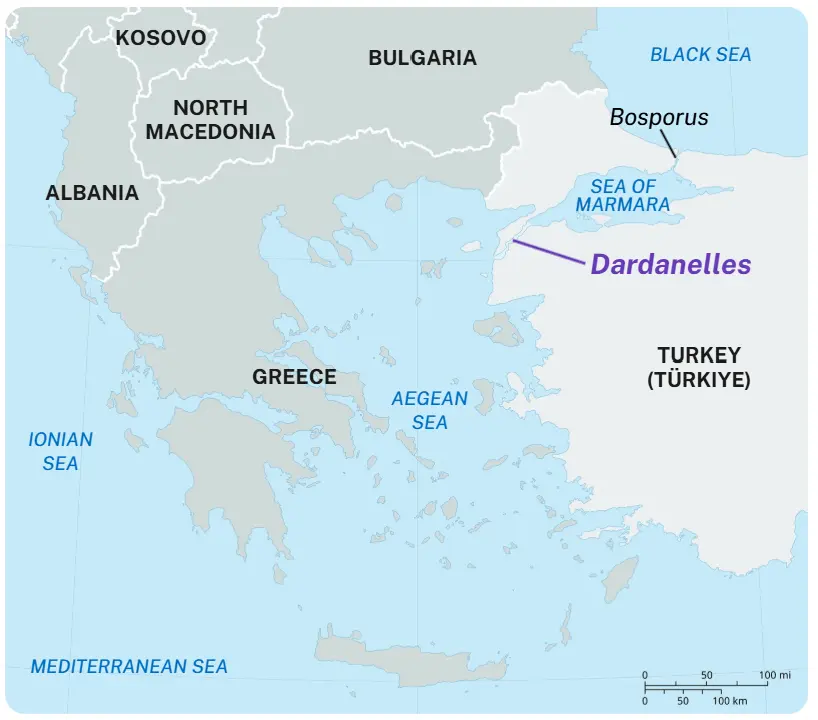
Turkey. This is the project most analysis omits. A swing state hedges between other actors' orders; a pole generates one of its own. Turkey clears that line on three counts.
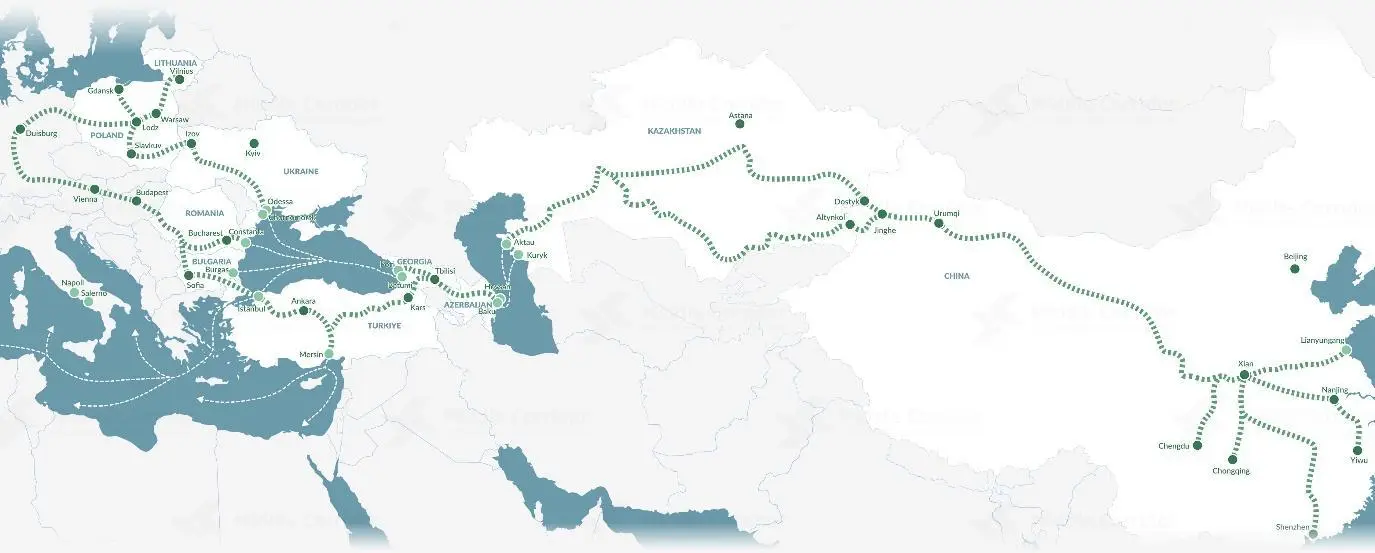
The question: does Turkey's corridor-borne leverage convert into order, or does it remain the capacity to block others'?
The Persian Gulf states. They are decisive, but not a pole. The six Persian Gulf monarchies are the hinge on which the contest turns: their alignment determines which project consolidates, but on the evidence so far they have not generated a regional order of their own. In 2026 they aligned publicly with the United States and hedged operationally toward the facts Iran was creating. Nor are they a bloc, and the differences between them determine each government's freedom of movement.
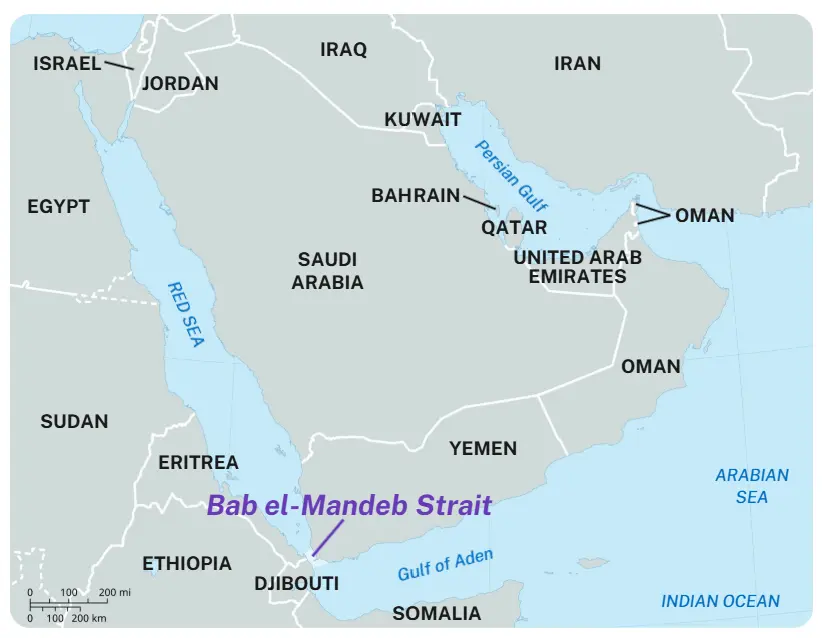
GSSI therefore treats the third-pole reading as a live test rather than a standing objection, and keeps the hinge classification until there is evidence of accession or operational use. The question: when the hinge moves, which state moves first, and toward what — and is Riyadh now the one deciding where it sits?
The system-spanning powers. China and India participate across the regional architectures without subordinating their wider strategy to any one of them. India signed the IMEC memorandum and holds the operating contract at Iran's Chabahar port; China brokered the 2023 restoration of Saudi–Iranian relations and routes its Middle Corridor traffic around Iran. Their interest is secure access at the lowest cost under whichever order prevails. Russia's position is stranger. Its stated doctrine calls for the restoration of the very passage regime Iran declared finished, while its conduct at the Security Council protected Iran's architecture from coordinated enforcement. Beijing affirms the principle and declines the conclusion; Moscow wants yesterday and votes for today. The question: at what point does system-spanning neutrality become a choice — and whose?
Iraq. This is the node every project has to pass through, and this season gives it the weight it carries. Every rewriting of the regional order since 1980 has run through Iraq — as counterweight, as trigger, as target and then as arena. In March 2026 Baghdad declared force majeure across its foreign-operated oilfields; the oil ministry's letter, dated 17 March and reported on 20 March, cited unprecedented military activity in the Strait.
Since then Iraq has been bargaining with the claimants to authority on either side of it. It bought passage for its tankers from Iran with a pledge about the use of its territory, and it exported about 2.5 million barrels a day in September, against some 3.5 million before the crisis. Within three weeks of the pledge, drones launched from a platform in Maysan province, near the Iranian border, struck Saudi Arabia's principal bypass pipeline. Baghdad responded with what its security spokesman called "preventive sovereignty": it temporarily closed border crossings with Iran and dismissed the Maysan operations commander and provincial police chief. On 30 September the US military announced that it had completed the withdrawal of its troops from Iraq, ending a twelve-year mission against the Islamic State group. Baghdad called it evidence of Iraq's "increasing strength and sovereignty"; Iran-aligned groups celebrated it.
Iraq is neither project's satellite and is indispensable to both. It sits on the land bridge Turkey's corridor requires, it hosts institutions aligned with Tehran, and it has just lost the external presence that anchored the old architecture on its soil. That is why Iraq remains one of the season's key tests.
Palestine. It is not a pole and not a project, but it is the legitimacy constraint every project has to clear. It is the deficit the New Middle East's normalisation track has never closed, the cause Iran invokes, and the issue on which Persian Gulf governments are most exposed to their own publics. Treating it as one thing obscures where it bites. The thesis identifies five distinct pathways, each with its own clock and its own failure mode.
Tehran's own position shows why the constraint cuts against Iran's project too. Iran does not invoke Palestine in general terms; it has a stated end-state and a stated method. The end-state is a referendum of Palestinians — Muslim, Christian and Jewish, including refugees abroad — to choose one political system for the whole of historic Palestine, a proposal Tehran says it has lodged with the United Nations. That system, in Khamenei's formulation, would then decide the fate of those who settled there later. The method is pressure, not negotiation. In 2018 he called moving towards talks with Israel "a great, unforgivable mistake", and in May 2024 he told Hamas's political leader that a Palestine "from the river to the sea" was achievable. Tehran presents this as the opposite of antisemitism: in 2019 Khamenei said that the "elimination of Israel" meant the end of a regime, not of Jews. Two consequences follow for the contest. First, Iran's end-state is incompatible with the pathway to Palestinian statehood that Riyadh makes its condition for normalisation, so Palestine cannot serve as a bridge between the Iranian project and the Persian Gulf hinge. Second, Tehran has stated in advance the mechanism through which it expects normalisation to fail. In early May 2024 Khamenei argued that governments normalising with Israel without a settlement would find their own publics turned against them: "if today the nations of the region are against the Zionist regime, that day they will be against their own governments". That is the third pathway, set out as policy by the actor best placed to exploit it.
Any account of the region's order that treats Palestine as solved or separable is describing a stability that does not exist.
WHAT IS AT STAKE
Why a contest over order is a pricing problem, not a background condition
Institutions with Persian Gulf exposure — traders, underwriters, lenders, sovereign funds, disputes counsel — have generally treated the regional order as background: the stable frame inside which specific risks are priced. The commercial proposition of this season is that the order is no longer background. It is the variable. Five consequences follow. Each is developed in a later episode, and each is stated here so that the reader knows what the season is ultimately pricing.
The settlement is a choice of architecture, not a date.
GSSI tracks seven settlement architectures for the Strait, from an interim sanctions-for-navigation arrangement to full rupture.
The premium is political. The 2026 record does not justify a permanent numerical floor under the oil price, and GSSI does not assert one. It does justify a structural risk premium for as long as the governance of the Strait is unresolved. The variable that matters is not the probability of physical closure. It is the probability that a security dispute can again make the route commercially abnormal, through insurance, owner reluctance, port disruption or state action.
The price record since June fits that reading. Brent fell to about $72 in late June, its pre-war level, while the Islamabad text appeared to be settling the governance question. After Iran suspended its Islamabad commitments in July, the premium returned, and by mid-September Brent was above $100 again. On 14 September the US Energy Secretary said that about 10 million barrels a day had passed through Hormuz over the previous week — roughly two-thirds of pre-war flows. Brent rose that day to $107.82. Barrels recovered faster than the premium fell.
GSSI does not claim that the premium is purely a governance premium. Analysts also cite depleted strategic reserves and the loss of Red Sea flows, and both are in the price. But the market's move on 28 September, which followed a rejected reopening proposal rather than any change in physical flows, is consistent with a governance premium — though a single day's move cannot prove one. If the reading is right, the premium compresses only as the governance question settles, in whichever direction it settles.
Currency is a mechanism under test, not a conclusion. Every previous attempt to move Persian Gulf energy settlement away from the dollar required a state to choose an alternative voluntarily, transaction by transaction, against American pressure at each step. A service-fee or permit regime denominated in something other than dollars would not ask anyone to choose. It would make the non-dollar rail a condition of transit for the cargoes that must cross the Strait.
HOW THIS SEASON WORKS
A stated hypothesis, named falsifiers, and no predetermined winner
Each episode of the season takes one node of the map and runs the method deeper than an institutional paper can. The analytical chain is the one this newsletter has always applied: from the sovereign balance sheet to the institutional architecture, from the architecture to its behaviour under stress, and from that behaviour to the commercial consequence. Primary sources come first, in their original languages where the signal sits there. Where an edition sets out the operational logic of a state in neutral terms, it does so to help exposed parties price risk. That is analysis, not endorsement. Each episode states its finding, the confidence the evidence supports, and the specific observation that would falsify it. The season does not track the news. It reports a development only when it changes a finding, a classification, a test or a commercial conclusion, and it says which.
The starting hypothesis is stated here so that it can be tested in the open. The order of West Asia is being contested by several regional projects, each converting leverage into institutions, and the capacity to constitute order in the region is no longer held in one place.
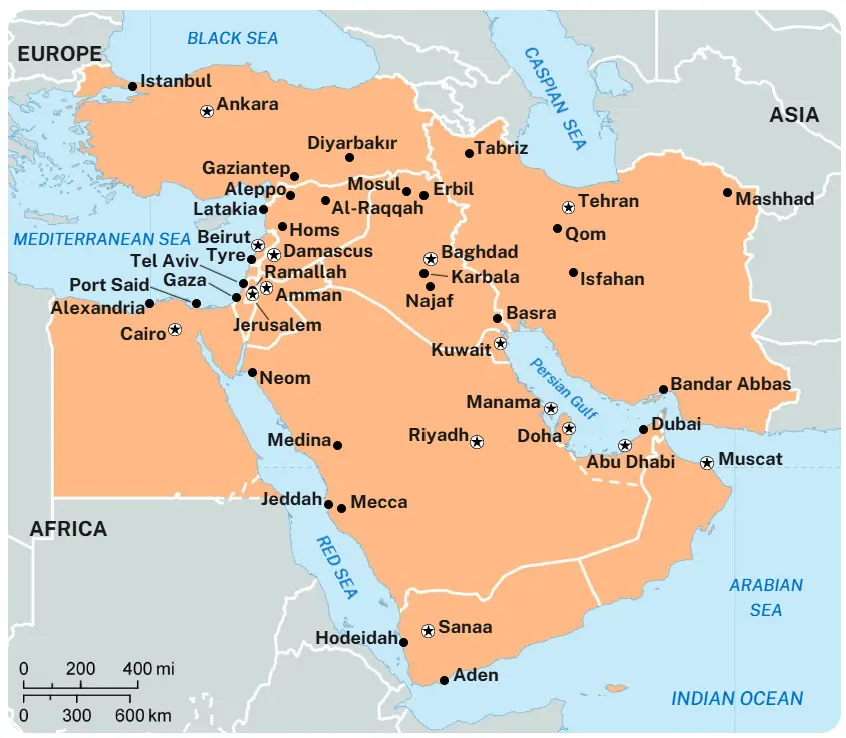
The hypothesis is about the contest, not the victor. It does not say that Iran will prevail. Nor does it say that Israel will, that this is Turkey's moment, or that the Persian Gulf states will pick a side — or that Riyadh will not build a side of its own. It says that the pen which drew the region's arrangements for most of the last century and a half, first in London and then in Washington, is no longer held by a single outside power. And it says that the institutions exposed to the region have not yet priced that change. The season begins without a winner in mind, and it may end somewhere quite different from where it starts.
The hypothesis would be revised, and the revision published as a revision, if the evidence moves against it. Four observations would count. A Saudi–Israeli normalisation carrying operating, financed IMEC infrastructure would show that the New Middle East can complete itself. The collapse of Iran's permit regime under sustained pressure, or an authoritative legal defeat that both Iran and the market accept, would show that the Hormuz administration was scaffolding rather than institution; the southern lane is the place to watch for the first. A great-power settlement imposed over the objections of the regional states would show that the pen has not moved at all. And accession by other states to a Riyadh-hosted security architecture would show that the contest has a fourth contestant — one that GSSI now classes as a hinge.
GSSI records its misses at full weight. Its scenario pack of January 2026 expected Iran's regional allies to activate simultaneously if the leadership was struck. They did not, and the record says so. This season will do the same. A publication that cannot state what would prove it wrong is not doing analysis. It is doing advocacy, and there is already enough of that about this region.
WHAT TO WATCH
A second signature on a services framework. Whether the Iran–Oman route is signed, announced or registered — and whether its operative vocabulary describes passage as a right exercised or a service rendered — will say more about the constitutional question than any statement about freedom of navigation. Iran has said that it will decide how to announce or register the arrangement. Registration would go to the one criterion the administration still lacks.
Accession to the Mecca agreement. A fourth state joining the collective-defence arrangement hosted by Riyadh, or its first operational use, would convert the Saudi third-pole reading from a live test into a finding.
The southern lane. Whether the escorted corridor sustains its flows through the fourth quarter, and on what insurance terms, is the most direct test of whether Iran's administration is contracting to the traffic that chooses to transact inside it.
THE QUESTION FOR THIS EDITION
Each edition by email.
Free. Each edition by email the day it publishes.
Subscribe →Read the unrestricted analysis.
The full unredacted edition, numbered source notes and scenario notes, on Speevr.
Read on Speevr →Test the assumption beneath your position.
A 30-minute review with the GSSI Forensic Sovereign Risk Desk.
Contact the Desk →Since 7 October 2023, West Asia's order has been contested — not in speeches, but in permits, corridors and price.